

Aplusify’s Checklist to Keep Your AMS Healthy
Internal User Engagement: Does staff know what their roles and responsibilities are as it relates to your AMS? Get buy-in from internal staff by giving them the tools to succeed.
- Identify what’s different in AMS and how it specifically affects the staff and their specific job function.
- Provide easy-to-follow guides, instructions and checklists.
- Create a process where staff can provide constructive feedback.
- Ensure you communicate with the staff changes before they happen.
External User Engagement: Be sure you understand how the new AMS will affect your members and key stakeholders.
- Have a clear communication plan to explain to members what they need to know and do. Be sure to focus on how it all improves their experience with the association.
- Create reports/dashboards that give you insight into problem areas that members are having trouble with.
- Ensure that you have a plan to collect and address questions/problems.
Data Hygiene: You spent a lot of effort ensuring that your data migrated correctly to your new AMS. Now, it’s time to make sure the data stays clean.
- Define what you would consider “dirty data.” For example, which of the following would you want to correct:
- Duplicate records based on email addresses
- State Abbreviations not capitalized
- Membership levels not accurately allocated to the right members
- Individuals not attributed to correct companies because of spelling discrepancies
- Assign a staff member or department to be responsible for cleaning data.
- Determine how often the data should be reviewed and cleaned.
- Setup reports, dashboards and/or triggers that will alert you when dirty data occurs.
- If you find certain errors consistently happen, review field types and requirements.
App Integration: As your AMS becomes a routine function, you will want to explore how existing or new can be integrated. Much like you planned for implementation, make sure you have a plan.
- Who will be responsible for collecting and approving requests for app integrations?
- What information will you need to gather in order to determine an app should be integrated or not?
- What is the approval process?
- If approved, who champions the integration process and ensures the AMS integrity.
- Make an integration plan with requirements, development plan, integration, launch and post-launch activities.
Organizational Capacity to Manage AMS: Having an AMS is like a garden. You will want to make sure it is being attended to. Do periodic check-ins to make sure there’s no gap in making sure your AMS is working for you.
- Is staff able to meet assigned tasks they are required to do within the AMS?
- Is your AMS team, able to troubleshoot issues that might arise for internal or external users?
- Can your AMS team keep up with requests for new dashboards, reports, or changes to the AMS?
- Does your team have enough technical knowledge to complete an upcoming app integration?
- Conduct a routine gap analysis to determine what the gaps are and potential solutions that could include training staff, employing technical staff, or working with a service provider who can provide you with immediate help.
View our webinar recording
Kickstarting Your AMS – The Implementation Journey
Looking for more information?
Check out our Recorded Webinars
The new healthcare cloud will provide health payers an entire view of members in a single dashboard which drives the productivity for the clinical professionals. The healthcare cloud will permit healthcare payers to create personalized and interactive connected experiences which improve the member experiences.
Health Cloud
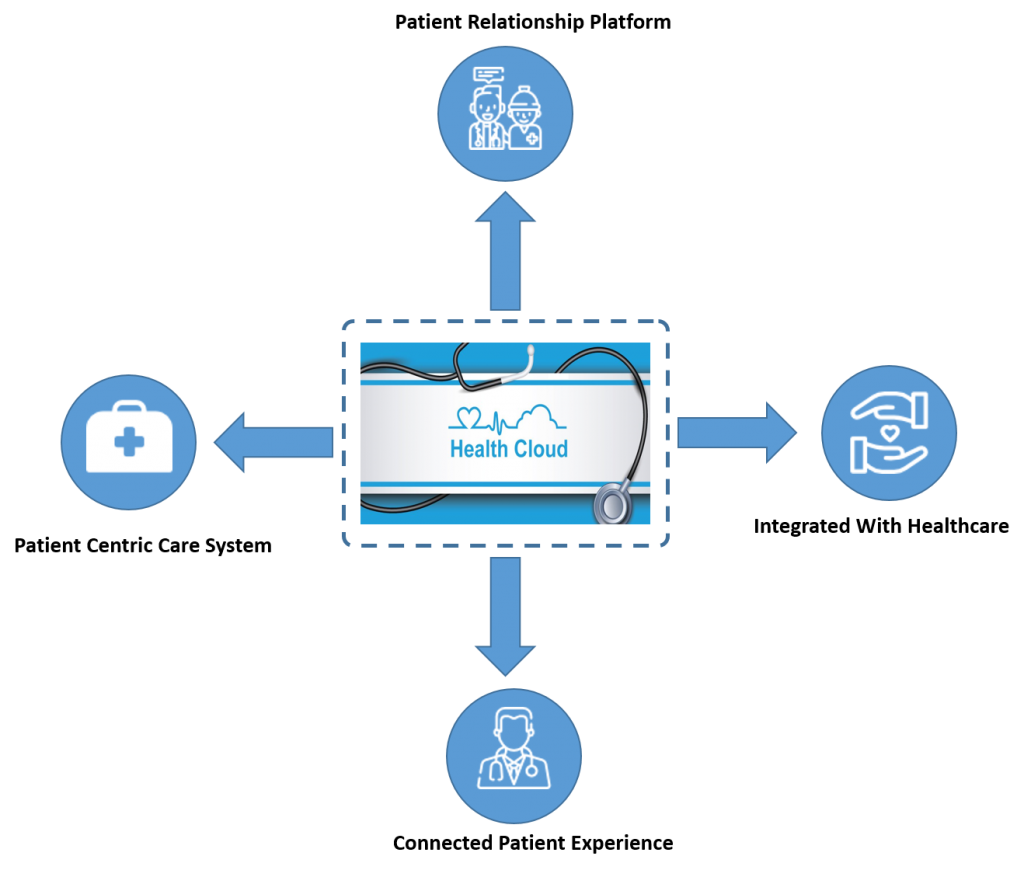
The healthcare payers are coming across an extremely competitive advantage where the providers and members can expect a personalized experience. Payers are expecting better and improved services as the cost of healthcare is increasing. The silos systems hinder the payer’s ability to get a complete view of the member’s data. This becomes the prime concern for personalized care and effective collaboration. Generally, the members struggle to understand the merits of care plans and offer some other approach to get a connected experience.
The workflow in the cloud for healthcare reinforces and transforms the manual processes into efficient and transparent processes. The healthcare cloud minimizes the dependence on lengthy and complex implementations. The time spent on planning and implementation is reduced and more time can be spent on execution. The following workflow indicates that with healthcare the overall process has been simplified and become efficient. The workflow highlights each step in the healthcare process. The shared document queues will distribute the necessary documents for the teams to work on. Documents can be segregated and arranged in the folders to work on. Workflows can be created easily.
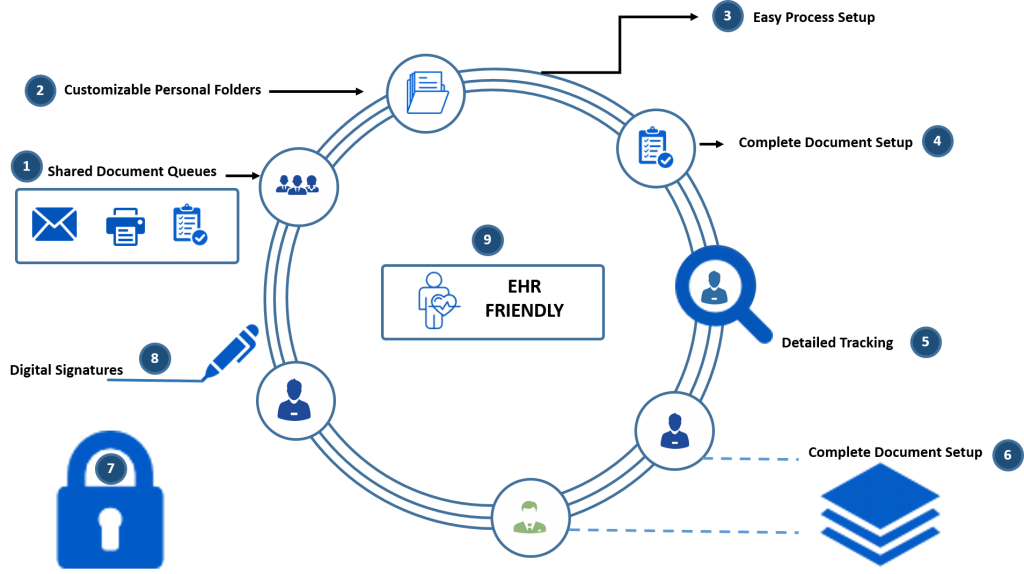
The visibility of the documents are retained and the management of inbound process has been centralized which eliminates the unnecessary copying, printing, and filing of patient’s data. With EHR systems, the data is managed in a powerful way. It will be interesting to witness the impact of healthcare cloud in terms of workflow efficiency and innovation.
View More Blog Articles